
For families living between cultures, languages and emotional worlds.
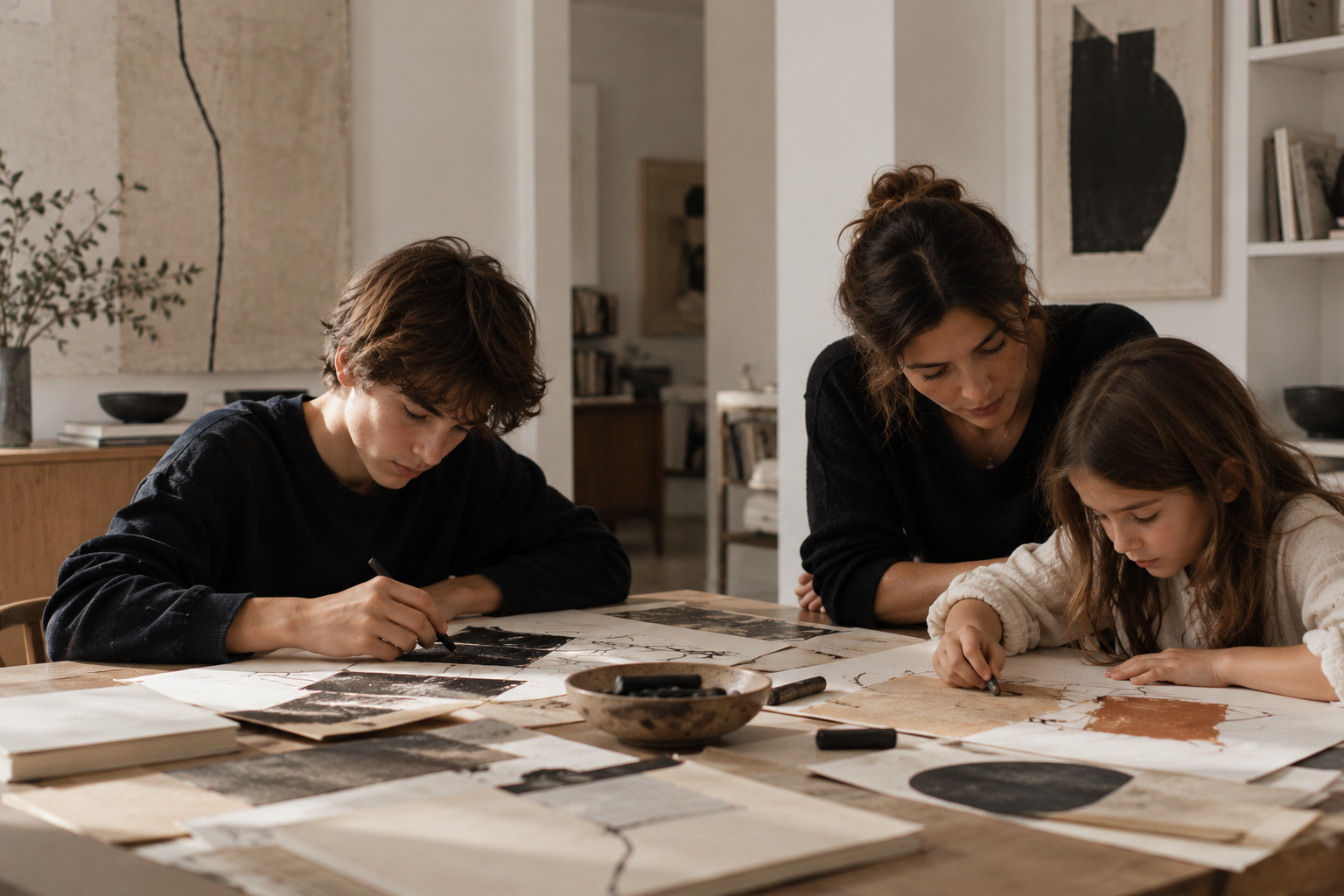
Intercultural Family Accompaniment
Intercultural family life can be rich, creative and complex. Families may move between countries, languages, parenting references, emotional codes and different ideas of belonging.
Art therapy offers a space where children, adolescents and parents can explore what may be difficult to express directly. Through image-making, reflection and dialogue, family experiences can become more visible, creating space for communication, emotional understanding and shared meaning.
This may be supportive for:
-Families navigating relocation or transition
-Bilingual or multilingual children and adolescents
-Mixed-culture families
-Parents with different cultural backgrounds or parenting references
-Children struggling with belonging, identity or emotional expression
-Families adapting to life in Como, Switzerland or international contexts
Possible formats:
Parent consultation
Child or adolescent sessions
Family sessions
Short-term relocation support
School or institutional collaboration
A family can share a home, but not always the same emotional language.
FAQ:
-
No. Artistic skill is neither required nor relevant. The focus is on expression, reflection and therapeutic understanding.
-
Sessions usually combine image-making, reflection and dialogue. Depending on the person and the process, we may work with drawing, painting, collage, clay, writing, objects or other materials.
The image is explored as meaningful material rather than judged aesthetically. It becomes a way to approach feelings, patterns and internal narratives that may be difficult to access through words alone.
-
This is a therapeutic process. Coaching often focuses on goals, performance and future action. Art therapy works with emotional processes, identity questions, relational patterns and inner experience.
It can support change, but it does so through reflection, symbolic expression and psychological exploration.
-
Yes. Children and adolescents often express through image, play, gesture and symbol before they can explain everything verbally. Art therapy can offer a safe way to explore emotions, belonging, identity, anxiety, family changes or social difficulties.
For younger clients, parent conversations may be included when appropriate.
-
Yes. Intercultural families may navigate different languages, emotional codes, parenting references and ideas of belonging. Art therapy can help make these experiences visible and create a space for communication beyond words.
-
“Corporate Hangover” describes the emotional, physical and creative after-effect of prolonged exposure to performance culture, corporate over pressure and only result-driven identity.
It may appear as exhaustion, disconnection, loss of inner rhythm, difficulty resting, creative block or the feeling of no longer knowing what one needs beyond external expectations.
Art therapy can offer a space to pause, observe and reconnect with one’s own inner process.
-
Yes. Sessions are confidential and held within clear professional boundaries. Confidentiality may only be limited in exceptional situations where safety is at risk, especially when working with minors.
I follow the standard of the European Federation of Art Therapy https://www.arttherapyfederation.eu/
-
Yes. Sessions can take place online. In-person sessions may also be possible depending on location and travel arrangements.
-
This depends on your situation. Some clients benefit from a short focused process, while others prefer ongoing support.
After the introductory consultation, we may begin with three exploratory sessions to understand whether this way of working feels right and what kind of framework may be most helpful.
-
You can begin by sending an email to sgonzalezmueller@gmail.com to arrange an introductory consultation. In this first exchange, we clarify what brings you here and whether individual, family or short-term work would be most suitable.